Carp Fishing – Using a Hi Sport Bait Boat

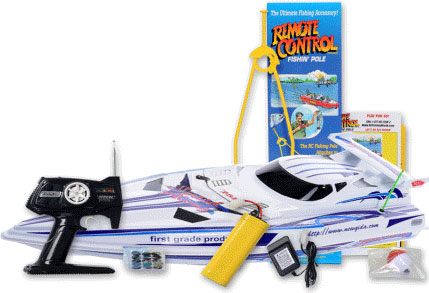
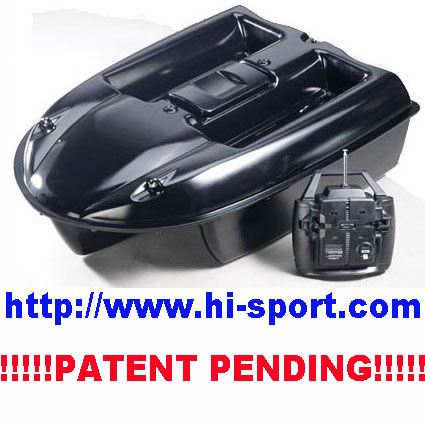
We’re going to try to educate our fishing members here in the U.S.A. about Bait Boats. They’ve been using them a long time overseas to improve the chances of landing more Carp. A Bait Boat is a simple concept, really. A bait boat is just a remote control boat, with a few added features. Can’t I just go to Walmart and pick me up a rc boat, you might ask? Well, no, here’s why. The concept of the bait boat is simple, Take advantage of the range and precision of the remote control boat to deliver fish food, more commonly known to us as Chum to a specific spot to attract the Carp. The part about chumming the fish has been tried many ways throughout history, but until the Bait Boat came along it was never as efficient.

Very Expensive, Try a $79.00 one from Fish Fun Co. instead.

http://rcfishingworld.com


John Bramley of K-1 Baits using the Hi-Sport Bait Boat (Watch for the take literally seconds after dropping the bait) Enjoy…
Video Rating: 3 / 5

Are you good enough for a Carp Tournament?

Carp Fishing Tournament

1st Place $30,000 • 2nd Place $25,000 • 3rd Place $20,000 • 4th Place $15,000 • 5th Place $10,000


The most elite professional carp anglers in the world will compete in the Carp Angling World Championship (CAWC) on the St. Lawrence River the week of September 23, 2011. CARP Tournament Series and the St. Lawrence County Chamber of Commerce announced the St. Lawrence River in northern New York State will be the site for the world-class tournament. Over 100 two-person teams are expected to compete along a 30-plus mile course on the river corridor of St. Lawrence County.
Expected among the nations represented for the 100+ continuous hours of competition will be teams from the United States, England, France, Holland, Germany, Russia, Poland, Czech Republic, Hungary, Canada, South Africa, Romania, Japan, Ukraine and Bosnia.
The 2011 CAWC is sanctioned by the UK-based International Carp Fishing Association (ICFA).
Ray Scott, founder of the Bass Anglers Sportsman Society® (BASS), will be the special celebrity guest at CARP Tournament Series’ elite Carp Angling World Championship on the St. Lawrence River in September. The legendary Scott sweetened the prize pool for the first-place winners with a getaway at his renowned private lake in Alabama.


The Radical Crash 3-Day Diet

Try the 3-day diet for immediate but short-term results. But only if our career depends on it and not done regularly. A 3-day diet has sure result but not aimed at better health – so it is adviseable to stick with 3 days only and to get back up on vegetables and carps after the diet schedule has ended.

There are people who need to lose weight fast for a short term. The so-called 3-day diet is most convenient and effective for them.

Is there really an effective 3-day diet? Yes, there is. And it’s really quite simple because it’s mostly about cutting back on calories-and it’s just for three days. The shorter it is the more workable it becomes. Definitely, we cannot prolong this type of diet over 3 days. Some people need this for a specific and momentary purpose.

Hence, a 3-day diet is not for everyone. Neither is it for life, unlike other diets. It’s not a healthy thing to do habitually either. People who do 3-day diets do it to pass certain weight or fitness requirements for the time being. Like boxers. Professional boxers are categorized according to their weights. To qualify for a weight division, overweight boxers-even those who just go slightly past the standard weight-have to loose weight fast.

There are times when 3 days before a fight, some boxers find themselves a bit overweight. Some resort to drastic weight-reducing drugs. But others prefer a 3-day diet. The trick here is to simply eliminate all calorie-rich foods and reduce liquid intake for 3 full days. It’s something similar to partial fasting. A tip here is that, it’s the cut on water intake that really makes this diet effective.

Another example is fashion models. Sometimes, on short notice, they are made to wear super fitting getups. To cope up, they undergo a rigid 3-day diet prior fashion modeling day to lose more excess weight and size and look extra slim. Thus, a 3-day diet is not really geared towards better health but better looks and qualification.

Diuretic beverages like tea and coffee make up most 3-day diets. Cruciferous veggies like cabbage, lettuce, broccoli, and cauliflower are, of course, excellent. Lean beef meat plus fish and chicken, some egg white are also possible. Important also are veggies and fruits high in fiber like squash, carrots, and papaya.

But bear in mind that the veggie and fruits should be taken sparingly in a 3-day diet. They should just slightly supplement a basically liquid diet mostly of diuretic drinks to flush out liquids and fats and reduce calories considerably within three days. After 3 days it’s back to regular eating. And the danger is that the yoyo effect afterwards may result to double weight gain.

Thus, a 3-day diet should not be done regularly to avoid getting in to the yoyo effect. And most especially, this diet is certainly no for everybody as it is a hard slimming program.

John Grant is a the author for a diet fads site where he is writing articles about the 3-Day Diet.


Related Blogs

I Love Touring Italy – Beautiful Lake Garda

If you are looking for a European tourist destination, consider Lake Garda located mostly in the Lombardy region of northern Italy. Depending on your interests, this beautiful area might be an ideal vacation spot. You can get classic Italian food, and wash it down with fine local wine. It is hardly undiscovered, but that shouldn’t stop you from going. With a little effort you should be able to find some relatively untouched spots. Be sure to read the companion articles in this series that present Milan, small town Lombardy outside of its capital Milan, and the Lake Como district. While people often think of Lake Garda as being part of Lombardy that is not entirely true. This beautiful lake spills over into the neighboring regions of Trentino-Alto Adige and Veneto as indicated below.

Lake Garda is an alpine lake, formed by glaciers at the end of the last Ice Age roughly ten thousand years ago. It is Italy’s largest lake measuring approximately 30 miles (52 kilometers) long and at most 10 miles (17 kilometers) wide. Near the lake the terrain tends to be mountainous in the north and flat in the south. The lake is relatively clean, but as tourism continues to expand…

We start our Lake Garda tour at its northern tip, Riva del Garda, situated just inside the region of Trentino-Alto Adige. We will travel counterclockwise around the lake, crossing the border into Lombardy and stopping first at Gargnano, then at Gardone Riviera with its historic neighbor Salo, and finally at Sirmione near the lake’s southern tip. We then enter the Veneto region stopping at Bardolino, Punta di San Virgilio, and finally come to Macesine, not far from our starting point.

Riva del Garda is probably the best-known resort on Lake Garda. It’s also one of the less expensive areas around the lake. You’ll find a castle with a moat. The Museo Civico (Civic Museum) is part of the Rocca, a medieval fortress on the lake. Don’t worry if you can’t sail or windsurf, local schools will be glad to teach you. The Thirteenth Century Torre Apponale (Apponale Tower) defended the city from invaders and held prisoners. Look for Riva del Garda’s symbol, Anzolin. She is the little angel on the top of the tower who welcomes all who enter the town as she spins in the wind.

Gargnano with a population around three thousand is a great place for fishing, snorkeling, and sailing. In fact it is one of the best places to sail on the western shore of Lake Garda. The town’s major attraction is the Chiesa di San Francesco (Cloister of Saint Francis) with its campanile (bell tower). The church graveyard contains Roman gravestones. As you walk around town you may see some houses that still show the traces of cannon balls fired during the Third War of Italian Independence in 1866.

In 1943 Mussolini founded his short lived Repubblica Sociale Italia (Italian Social Republic) here. He installed himself in a late Nineteenth Century art nouveau villa called Villa Feltrinelli about two miles (three kilometers) north of town. You can get your revenge by staying in Villa Feltrinelli, which is now an upscale hotel, but you this will cost you plenty. I’m told that you won’t be disappointed with its beauty and luxury including magnificent gardens and a fine library. So we see that even towards the end of his days, Benito was able to live well. Shortly thereafter…

Gardone Riviera, population twenty-five hundred, is best known for the mansion Vittoriale degli Italiani (The shrine of Italian victories) and the major Italian writer Gabriele d’Annunzio who lived there from 1922 until his death in 1938. This building has been called a Fascist Luna Park so you probably can guess d’Annunzio’s politics. He was both Mussolini’s mentor and major competitor. Mussolini purportedly stated: “When you are saddled with a rotten tooth you have two possibilities open to you: either you pull the tooth or you fill it with gold. With d’Annunzio I have chosen for the latter treatment.”

Can you guess who also lived in Vittoriale degli Italiani? Mussolini’s mistress, Clara Petacci, conveniently resided here to be close to her heart throb Benito when he was not exactly roughing it in nearby Gargnano’s Villa Feltrinelli as described above.

Be sure to visit the two acre (one hectare) Giardino Botanico (Botanical Garden) Andre Heller formerly known as Giardino Botanico (Botanical Garden) Hruska. You’ll see thousands of exotic Alpine, Mediterranean, and subtropical plants. Not bad for such a small site.

The little town of Salo, population ten thousand, once had big ambitions. It was the capital of Mussolini’s Nazi-backed puppet state, the Italian Social Republic, also known as the Republic of Salo. Its main sights include a Fifteenth Century Duomo (Cathedral), the Sixteenth Century Palazzo della Magnifica Patria (Palace of the Magnificent Fatherland) with a historical museum covering among other subjects, the Resistance against Fascism, and a Palace hosting an archeological museum. Every Saturday morning there is a great outdoor market where you can forget about politics.

Sirmione, population about seven thousand, is our last stop in Lombardy. This area was definitely settled by people more than two thousand years ago; many are said to have lived in houses on stilts. Its major tourist attraction is the Grotte di Catullo (Grotto of Catullus) a large rectangular structure said to have been the site of the fun-loving Roman poet Catullus. The truth is that his villa was most likely nearby. In any case you should visit the ruins and the museum.

Bardolino, population somewhat exceeding six thousand, is situated on the eastern shore of Lake Garda. It’s the biggest resort on the lake with numerous shops and historical remains. Bardolino’s main claim to fame is its wine, discussed at the end of this article. In the fall it hosts an annual Cura dell’Uva (Grape Cure) Festival. Some of the participants put crushed grapes on their skin, others drink grape juice, and still others drink the local wine. I think they all have fun, even if they aren’t cured.

Stop to admire the Punta San Virgilio (Saint Virgil’s Promonotory), said to be the most romantic spot along the lake. Nearby is the Fifteenth Century Villa Guarienti di Bronzane but you can only see it from the outside. The Parco Baia di Sirene (Mermaid’s Bay Park) for kids and adults is open to the public.

Malcesine whose population numbers thirty-five hundred also claims to be the most popular resort on the lake. It’s near the mountains and provides several ski lifts. A cable car takes you to the summit of Monte Baldo. If you’re ambitious head back down by mountain bike. Be sure to see Castello Scaligero (Scaligero Castle).

What about food? Of course near the lake fish is a major part of the local cuisine. Indigenous fish include the rare Lake Garda carp, whitefish, lake trout, eel, pike, tench, and perch. Citrus fruits, cheese, and wine also form a major part of the diet. Lake Garda’s olive trees are quite special. To conserve land they are trained to grow high, so high that scali, special long poles originally invented for lemon trees are needed to harvest the olives. Their olive oil is exceptional, even by Italian standards.

Let’s suggest a sample menu, one of many. Start with Bigoi con le Agule (Spaghetti with Sardines.) Then try Luccio in Salsa (Pike with Sauce, eaten cold). For dessert indulge yourself with Torte di Mele (Apple Cake.) Be sure to increase your dining pleasure by including local wines with your meal.

We conclude with a quick look at Lombardy wine. Lombardy ranks 11th among the 20 Italian regions in acreage devoted to wine grapes and in total annual wine production. The region produces about 62% red and ros?nd 38% white wine, but there is little ros?There are 15 DOC wines. DOC stands for Denominazione di Origine Controllata, which may be translated as Denomination of Controlled Origin, presumably a high-quality wine. The G in DOCG stands for Garantita, but don’t expect a guarantee that such wines are truly superior. Over 47% of Lombardy wine carries either the DOC or DOCG designation. There are three DOCG wines: the sparkling Franciacorta said to compete with French Champagne and priced accordingly, the red Sforzato di Valtellina, and the red Valtellina Superiore.

Remember, Lake Garda belongs to three Italian regions: Lombardy, Trentino-Alto Adige and Veneto. The best-known local wine comes from east of the lake near Bardolino, part of Veneto. Bardolino DOC is produced in a variety of styles from a specified variety of local grapes. Bardolino Superiore DOCG is a dry red wine produced from local grapes by following more stringent specifications.

In his younger days Levi Reiss has authored or co-authored ten computer and Internet books. Now he prefers drinking fine Italian, German, or other wine, accompanied by the right foods and the right people. He knows what dieting is, and is glad that for the time being he can eat and drink what he wants, in moderation. He loves teaching various and sundry computer classes at an Ontario French-language community college. Visit his new wine, diet, health, and nutrition website www.wineinyourdiet.com and his Italian wine website www.theitalianwineconnection.com.


Related Blogs

Mediterranean Diet Information

Mediterranean diet is basically the dietary traditions followed by the people of Greece, Spain and southern Italy who live around the Mediterranean Sea. It has been studied by an American Dr Ancel Keys when he landed in Greece in 1945. He discovered that the people of Greece and Spain had longer life expectancy and didn’t have any major health problem.

Their diet mainly consists of lots of food from plant sources freshly eaten minimally processed, locally grown, and seasonal and very little food from animal sources

Most Recommended Tips for Mediterranean Diet Information http://www.dietbuzzer.com/blog/category/protein-diets

 Foods mainly are fresh fruits, vegetables, sea fresh fish, herbs, bread, grains, nuts and seeds, non refined oils like olive oil which is 25% to 35% of fat consumed and low consumption of saturated fats, moderate consumption of cheese and yoghurt, honey and fresh fruits for desserts, lots of fresh fish and non refined cereals.

Vegetables consumed should be at least 1 pound and red meat consumed sparingly only. Lots of physical activity and consumption of wine if taken should only be 1 glass for women and 2 glasses for men daily with meals.

Fruits are mainly grapes, raisins olives, avocado, strawberries, raspberries, currant, blue berries grapes, black olives, orange, apple, pear, figs, pomegranates, dates, passion fruits, cherry, apricot, grapefruit, peach, prunes, quince, bergamot and plums.

Vegetables are spinach, lettuce, cauliflower, broccoli, white peach, bell pepper, carrot, beetroot, tomato, onion, shallots, scallions, green onion, celery, eggplant, capers, cucumber, lemon, Zucchini, white and red cabbage, mushroom, grapevine leaves, artichokes, potatoes, sweet corn and gherkin.
Grains are mainly pasta, couscous, rice, polenta, bulgur etc.

Legumes are carob, peas, beans, lima beans, chickpea and lentils.
Herbs and spices used are anise, basil, bay leaves, borage, peppercorns, garlic, chilies, chamomile, chervil, chives, dill, fennel, lavender, marjoram, mint, nutmeg, oregano, parsley, sesame seeds, rosemary, sage, savory, sorrel, tarragon, and thyme, vanilla, mahaleb, red saffron, masticha, cinnamon, clove, coriander, cumin and caraway.

Most Recommended Tips for Mediterranean Diet Information http://www.braceletbreastcancer.com/tag/ribbon/

Cheese used are mainly from sheep and goats milk – bocconcini, edam, feta, halloumi, kasseri, kefalograviera, kefalotyri, roquefort cheese, mozzarella, mitzithra, manouri, manchego, peciino toscano , mascarpone, parmesan, and pecorino, anthotyro, xynotyri, ladotyri, anevato and batzos.

Nuts are almonds, fennel, poppy, sesame, pistachio nuts, peanuts, hazelnuts, walnuts, pine nuts and chestnuts.

Fish and fillets are herring, salmon, trout, tuna, anchovies, sardines, mackerels, cod, and carp. Sea foods like octopus, clams, mussels and squids are also eaten.A wide variety of these foods consumed daily has been found to be very good for the heart as well.


Hi Friends, I am Priya and  I’d like to write about my interest, and here i am all sharing about my Weight Loss, Health, Beauty & Younger looking Secrets on my two websites http://www.dietbuzzer.com/blog And http://www.healthages.com


Related Blogs