Tag Archives: Fishing Rod

How to Use a Fishing Rod

Rods are basically made from carbon. Plastic, composite carbon combined with Kevlar, which is a kind of material that is bullet proof, or just high carbon. Since the carbon’s force and strength in connection to its mass is light, making it strong material that can allow thinner fabrication but still is able to keep the span and length. A rod that is lighter evidently handling will be easier, controlling it would be less tiring on ones arms and reduces resistance to air giving one an easier time accurately casting it, particularly on windy ways.

Rods come in silicon carbide, hard chrome or ceramic rings having a function of letting the line pass through. These are precisely used because of their smoothness having the function to minimize friction when passing through the line and keep the maximum strength. Silicon materials are a fact costly, so an alternative is bring into play ceramic rings like Zircon which when taken in to account, it is not as tough or as light, but is much cost effective. Rings made of chrome are better, although every season they require replacement, they do deliver excellent job of line running. At least thirteen rings are needed from the handle all through the tip, lesser near the handle, needing more close to the tip. The line can fasten itself to the rod, if you don’t have enough rings.

When determining length of the rod, you want to take into account exactly what kind of fishing you want. If you want far out fishing, in that case choose a larger rod as this will offer you better control when you are playing the fish. If you are planning to go fishing in an area that is enclosed, you will need a shorter rod. Normally, the safe rod size to choose is13ft (3.9m). This is lengthy enough for a waggler but does not cast out too far.

Handles

Handles are made from either cork or foam. Whichever you choose, this is a matter of preference. Just try handling both materials so you can have a good “feel” before buying it.

Action

Action is the term used in describing how the rod will bend when it is placed under the lot of strain and effort of a fighting fish.

There are two types of tip on a rod, the hollow and spliced tips. Hollow tips are good in catching carp, tench and chub which have a progressive or developing action making it sharp for quick bites, yet proficient enough to manage long distance strikes. Spliced tips normally are normally spliced to the end with two feet solid carbon. This rod is sharper so it is a good pick for fast acting fish.

When choosing a rod, these questions will help you pick the right one:

1.    How frequent and where do you fish? Are you a beginner, a weekend warrior, or a tournament pro? If you are just starting out, you may need to budget and spend less money on your first rod. Once you learn the techniques and once you have decided that fishing is for you, that is the time to spend on more specific rods.

2.    Freshwater or Saltwater fish? While there are a few rods that can be used for both fresh and saltwater fish, most rods are made for a specific purpose and application.

3.    Spinning or Casting? The species you that you choose to chase will determine it.

4.      Power, sensitivity, and your technique. The rod should match the way you enjoy fishing. If you like to fish with lures, then you should look for a rod that is comfortable enough to cast frequently all day long.

To learn about types of dolphins and endangered dolphins, visit the Facts About Dolphins website.
Using a Fishing Rod

Rods are basically made from carbon. Plastic, composite carbon combined with Kevlar, which is a kind of material that is bullet proof, or just high carbon. Since the carbon’s force and strength in connection to its mass is light, making it strong material that can allow thinner fabrication but still is able to keep the span and length. A rod that is lighter evidently handling will be easier, controlling it would be less tiring on ones arms and reduces resistance to air giving one an easier time accurately casting it, particularly on windy ways.

Rods come in silicon carbide, hard chrome or ceramic rings having a function of letting the line pass through. These are precisely used because of their smoothness having the function to minimize friction when passing through the line and keep the maximum strength. Silicon materials are a fact costly, so an alternative is bring into play ceramic rings like Zircon which when taken in to account, it is not as tough or as light, but is much cost effective. Rings made of chrome are better, although every season they require replacement, they do deliver excellent job of line running. At least thirteen rings are needed from the handle all through the tip, lesser near the handle, needing more close to the tip. The line can fasten itself to the rod, if you don’t have enough rings.

When determining length of the rod, you want to take into account exactly what kind of fishing you want. If you want far out fishing, in that case choose a larger rod as this will offer you better control when you are playing the fish. If you are planning to go fishing in an area that is enclosed, you will need a shorter rod. Normally, the safe rod size to choose is13ft (3.9m). This is lengthy enough for a waggler but does not cast out too far.

Handles

Handles are made from either cork or foam. Whichever you choose, this is a matter of preference. Just try handling both materials so you can have a good “feel” before buying it.

Action

Action is the term used in describing how the rod will bend when it is placed under the lot of strain and effort of a fighting fish.

There are two types of tip on a rod, the hollow and spliced tips. Hollow tips are good in catching carp, tench and chub which have a progressive or developing action making it sharp for quick bites, yet proficient enough to manage long distance strikes. Spliced tips normally are normally spliced to the end with two feet solid carbon. This rod is sharper so it is a good pick for fast acting fish.

When choosing a rod, these questions will help you pick the right one:

1. How frequent and where do you fish? Are you a beginner, a weekend warrior, or a tournament pro? If you are just starting out, you may need to budget and spend less money on your first rod. Once you learn the techniques and once you have decided that fishing is for you, that is the time to spend on more specific rods.

2. Freshwater or Saltwater fish? While there are a few rods that can be used for both fresh and saltwater fish, most rods are made for a specific purpose and application.

3. Spinning or Casting? The species you that you choose to chase will determine it.

4. Power, sensitivity, and your technique. The rod should match the way you enjoy fishing. If you like to fish with lures, then you should look for a rod that is comfortable enough to cast frequently all day long.

Find out more about fishing including sea fishing and fly fishing at About fishing

How to Catch Carp Using ESP Fishing Tackle

Carp fishing is growing in popularity. More and more, those who are interested in fishing as a serious sport have begun to discover the challenge these “big fish” have to offer. They have also discovered the importance of using the right equipment. And E.S.P. Fishing Tackle is a brand preferred by many carp fishermen.

The first thing you should keep in mind when choosing equipment is that carp are big, heavy fish. You can expect to catch them with your garden variety fishing rod or fishing pole. No, if you try to catch a carp with something that isn’t strong enough to do the job, you can pretty much count on a broken line, and no fish to show for your efforts. So, if you’re after carp, you need a sturdy, high quality rod and reel with a 15 pound test line.

Another thing to keep in mind is that carp are fighters. Don’t expect to just catch one and reel it in. In fact, trying to do so is another way to get your line broken.

When fishing for carp, you have to look at it as a game. A game where patience is the best way to win. When you feel the carp at the end of your line, don’t immediately try to reel it in. In fact, the opposite. Let your line out as much as possible so the carp can run with it. This will lull the fish into a false sense of security.

Once you’ve let the fish run for a bit, start reeling it in. But do it slowly. If you do it too hard and fast, the carp will know it’s in danger, and will start fighting really hard. Not that you don’t want the carp to struggle at all. In fact, you want the fish to tired itself out, which is what will happen with you pulling in one direction and the fish trying to swim in the other. But, if the fish gets upset enough to really fight, you could end up losing them.

So just keep reeling in slow and steady. This will tire the fish out enough not to put up a real fight, and will bring him close enough for you to pull him out of the water.

Finding equipment strong enough to handle carp can be tough. Fortunately, E.S.P. Fishing Tackle has plenty of rods available that are more than strong enough to handle a 10 or 20 pounder.

Written by Glen Buchanan, Keep-Fishing.com, Carp Fishing with ESP Tackle.

Commonly Used Fishing Equipment in the UK

Fishing in the UK is a sport that’s both relaxing and exciting. The relaxing part is casting a baited hook into the water and waiting for an unsuspecting fish to happen by. The exciting part is when the fish takes the bait. Here’s some information about two types of Fishing Equipment required for this enjoyable sport.

When you are starting out as a fisherman in the UK, it is best to start with the most simplistic form of Fishing Equipment. It really doesn’t require a lot of fishing gear to go fishing. However, a rod or pole is indeed a necessary piece of equipment. The fishing pole is used to suspend the line from which hangs the bait for the fish. Bamboo, fiberglass and carbon fiber are all basic materials used to make the poles. The fishing rod is used for the same purpose but is somewhat more sophisticated. They have various lengths and also vary in action. The sizes are available from a 24-inch rod to 20 foot one. The casting is better with the longer rod.

There are many different types of fishing rods. A carbon fiber pole is a more technologically advanced pole, which is usually used for coarse fishing in Europe. Fly fishing rods are made to cast artificial flies. They are part of the Fishing Equipment used to catch salmon in the UK. Many fishermen in the UK use this salmon fishing equipment each year for a successful catch. Normally salmon is fished from the rivers in England, although it can be done well in the sea also. In addition to the right rod, you will need waders for the majority of UK Rivers in order to get to the best fishing places.

When you are searching for sea fishing equipment in the UK, try to find sea rods made to be used on the open sea. These rods will be built stronger and longer than the other kinds. For sharks and other huge game, specialty rods are designed. Be sure that the deep-sea fishing rod that you have selected can hold up to the pressure of the resistant larger fish when they are hooked. Also be certain that it is constructed from material such as fiberglass or graphite, which will resist corrosion from the salt air.

Every other part of your tackle has to be able to fit with your rod. This includes the lines, lures, reels and hooks. If you aren’t sure about your choices, get advice from a more experienced fisherman. You need to bear in mind that no matter what kind of fish you are trying to catch in the UK, you have to have the right fishing equipment to be successful.

Our fishing store caters for Sea,Game and Coarse anglers.We hold all leading brands in rods and reels as well as a range of terminal tackle and baits.For more information Click Fishing Equipment For further details Click http://www.keenstackleandguns.co.uk/fishing-equipment/

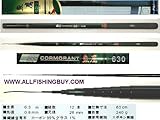
21 Ft 6.3 M Telescopic Fishing Pole Rod 99% Japan Carbon

  • 99% Graphite High Modulus Carbon Manufactured in Japan
  • 12 Telescopic Sections, Folded Length: 2.0ft(60cm), Total Length: 21ft / 630cm(6.3 Meters)
  • Weight: 8.4oz(240g), Diameter Minor: 0.8mm, Diameter Major: 26mm
  • Last Section has Elastic, Connected to the Pole Tip (Not a rubber elastic). Pole Is Designed To Use Without A Reel.
  • Rod has Exclusively High Performance, very Flexible and very Strong

Product Description
This is a brand new 21ft pole, easy for long cast, Weight only 8.4 oz / 240 g., easy to carry, Folded length just 2 ft / 60 cm. 12 telescoping Sections extends from a closed length of 2ft to 21ft. The pole is made of a 99% High Modulus Graphite Carbon manufactured in Japan, using Japanese Design, Engineering and Technology. This pole allows you to place your bait exactly where you want it, as quietly as possible, to get it in to the hard to reach places where reel r… More >>

21 Ft 6.3 M Telescopic Fishing Pole Rod 99% Japan Carbon