Tag Archives: Fishermen

Monster Carp The Size Of A Whale

Monster Carp The Size Of A Whale

Everyone has that special fish. The story they tell at Thanksgiving dinner, “that one time,” that lives in family infamy. A proud man keeps an ornament, cleanly propped above the fireplace. More humble fisherman might never tell the story at all, smirking to god over their good fortune. Regardless of the path a fisherman chooses, catching the right Carp will quench the thirst of any outdoors adventurer (as long as they aren’t hungry).

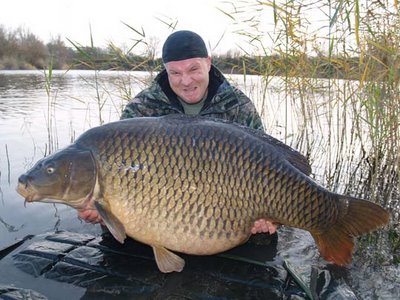
Carp are some of the most magnificent species under the water, frequently willing to fight a lure right off the pole. The Carp pictured above, a whopping monster Carp, was brought down some years ago in frigid northern waters. Monster Carp like this survive all over the United States, as well as Canada. Adventurers looking to grab a similar monster Carp, often need not look further than their local stream. Carp grow “into” their environment, often allowing “monster carp,” like the one above, to grow throughout the entirety of their lifespan, find a deep stream and a monster Carp may live there.

Known predominantly as a bottom feeder, often mislabeled and frequently released, Carp fishing is about the adrenaline rush of bagging not just any fish, but thee “monster Carp.” Tales spawn from all over the world of particular individual monster Carp reaching 200-300-400 pounds. Even ancient artwork, from North American Indians long since evacuated, suggests monster Carp have been a favorite grab for sport fisherman, dating back centuries. It is human nature, a fisherman’s most natural and innate desire, to bag a BIG fish. Not just a Big fish, a monster, a giant, a Goliath, from here to here and over there. A “that one timer.” Monster Carp provide specifically that desire, an opportunity to quench that natural thirst for fishing sports greatest achievement. North American Carp like this are some of my favorite fish personally, so I am biased to the craft I must admit. I love to cast my line, medium action, and get to work.

Monster Carp fishing is awesome, ideally with a medium action line, designed to bend about 2/3’s down the rod and providing great safety. I give up some distance on my cast, sometimes I even RC Fish, I prefer streams, where I can see the monster. Reeling in a 100 pound fish provides that moment of satisfaction. Don’t hesitate, don’t worry about slender details, find a local stream and go to work!

Fishermen Accused Of Improperly Discarding Fish Caught In Lake Koshkonong

Fishermen Accused Of Improperly Discarding Fish Caught In Lake Koshkonong
JEFFERSON, Wis. — Two fishermen employed to remove carp from Lake Koshkonong last fall are accused of catching more than 300 walleye in their nets and then discarding the fish instead of releasing them.

Read more on WISC-TV Madison

How To Improve Your Weekend Carp Fishing Success Right Now!

If you are like most weekend anglers trying to fit fishing in between all kinds of other time-consuming activities, you will know that weekend fishing can be a challenge in terms of achieving really good consistent catch results. But there are many unique tips you can exploit that can seriously multiply your chances and create totally unique opportunities for you that make catches much easier for you compared to other fishermen so read on for them now!

First think about the fish and focus on the fish. Do not think about outside influences not connected with your fish in your water directly. For instance if you have read a carp magazine in the previous week and want to try out a new bait and rig and method because it says its really good, do not act on it. Instead visit your lake mid-week if at all possible in order to learn more about the entire environment the fish are in.

The more you take in the more you form a big picture, a 4 dimensional picture of what is going on in your water, and on the banks. I say a 4 dimensional big picture because this part is you; your thought in response to what you see and feel will influence your thoughts and these will directly influence how you fish. The more you have this kind of biofeedback going on the more suitable and appropriate your fishing will be to the moment in time and the fishing situation right now in the present.

I say this because masses of anglers are fishing in the past thinking that worked previously will work today not realising that fish are such dynamically adaptive beings that they can evade your baits and rigs and methods if not purely because they recognise potentially dangerous scenarios. It is very simple to fool fish into feeling safe and so much more relaxed and more confident and far easier to hook. You remove as many danger reference points from your tackle, rigs, baits and lines and entire fishing approaches that you can possible remove!

The easiest way to fail when weekend fishing is to think that what worked before will work again and again. There are so many waters now under so much fishing pressure from anglers that the same rigs and baits will fail within a matter of weeks when enough fish have been hooked on them. This is no exaggeration on some waters. High nutritional baits are supposed to go on working for years but this is simply not true if you do not adapt their danger reference points to get around fish caution.

I know Gary Bayes of Nashbaits agrees with me on this one – because he basically told me this in so many words, based on his own bait testing experiences. But it is logical that if enough pressure is put on fish from any bait even if it is lobworms or maggots then fish will very soon become cautious and feed on such baits extremely differently (if they actually take such baits anymore at all,) following negative experiences having been hooked on them!

For example I can tell straight that a rig that has a worm on the hair as well as a cut-down pop-up boilie is going to have far more potential for fooling a very experienced and extremely wary cautious old fish, compared to a standard pop-up bait that such a fish has had many thousands of opportunities to deal with and so more easily avoid over the years!

New baits have the edge over baits that have been hooking fish and are used by the majority – of that there is absolutely no doubt. Also there is no doubt that the bigger fish in a water can very definitely be among first to succumb the fastest to newly introduced baits. I make my own homemade baits based on the fish first and not ingredients or recipes; such things are secondary. My main focus is on the properties and characteristics and modes of action of bait substances that get break down or bypass fish resistance to feeding which will naturally transform caution into confidence! What is your focus and how powerful is it; does it even make enough logical sense compared to other forms of focus?

Can you see how powerful this thinking approach is? Compare it to simply buying a bag of readymade baits or even committing to a bait long-term simply because a mate suggested you get on it because it is doing the business! Remember that any bait you can easily get hold of can usually be also exploited by anyone else on your lake – in direct competition to you; thus vastly reducing your chances of catching your target fish the more fish get hooked on that bait over time. This is a very major reason I hate to use readymade baits, but it is not just the unknown factors of who might have used the baits and lost their edge already even for one individual fish.

One of the incredibly important points about success with bait is that ideally they will not resemble any baits that have hooked fish before. If they do then chances are you have just lost huge advantages over the fish which you could have had and are free to everyone!

When you begin your entire fishing approach by thinking and experiencing your bait and rig and entire underwater scenarios just as closely as possible to how a fish might then you will catch loads more fish! Remember that fish sense things in water not in air. The colours and tones and tastes and flavours and smells and palatability of baits and sounds in water and feel and look of rig materials and main lines will be different to what you think they might be to a carp. In part this is because our senses are so vastly dulled compared to fish and we are adapted to live in air not water. Also baits look different to fish at a depth of perhaps 12 feet or 20 down after 12 hours immersion compared to what they might look like in a glass of clear water!

Although fish are more sensitive to different ends of the light spectrum compared to us and tones are very much more important to fish, remember that they do pick up on things most anglers just do not appear to be interested in. for instance the way they can detect weak electrical fields around leads and rigs and baits. The way light penetrates and diffuses in water, how it refracts in water, and how main lines and rig materials will not only not necessarily match the colours of bottom weed and silt and gravel etc, but that fish are perceiving things differently to us because they are acutely aware of tiny details in their environment.

OK so attention to detail is of primary importance and very many weekend anglers do not take anywhere enough care with this and simply copy other anglers and expect things to work out! Your bait recipes and modes of action teamed with how they are perceived by fish are of exceptional importance in actually achieving bites in the first place.

In maximising the impacts of your baits as being different and unique I will say now that I especially do not recommend using any rounded boilies or pellets at all and certainly not barrels or round baits. Why use things that lost their edge years ago if merely because of their basic shape? Sure rounded baits catch but part of that is because the vast majority of anglers insist on using them, but loads of other seriously successful alternatives exist!

Think about it; if you do things based on thinking from the perspective of fish then you are far more likely to succeed in short sessions and longer sessions anyway. If you are out of touch with fish you are really just hoping for some luck to come your way and just working on chance. But modern fishing can be very much about catching fish by design not luck.

For instance, if you do things in unique ways using the right information and knowledge, then you can set up your own feeding area that can out-compete even a natural hot-spot such as a significant bloodworm bed. This is no exaggeration, but it can take someone years to work out the basic bait principles for achieving such things to not only create but to maximise such feeding situations to your very own unique favour. But such edges make fishing success guaranteed!

Weekend catches can be extraordinary far more often when you think about things from differently from the far more detailed perspectives and senses of fish, and when you get and exploit the very best information on how fish really work! Revealed in my unique readymade bait and homemade bait carp and catfish bait secrets ebooks is far more powerful information look up my unique website (Baitbigfish) and see my biography below for details of my ebooks deals right now!

By Tim Richardson.

Now why not seize this moment to improve your catches for life with these unique fishing bibles: “BIG CARP FLAVOURS FEEDING TRIGGERS AND CARP SENSES EXPLOITATION SECRETS!” “BIG CARP AND CATFISH BAIT SECRETS!” And “BIG CARP BAIT SECRETS!” For these and much more now visit:

http://www.baitbigfish.com

The home of the world-wide proven homemade bait making and readymade bait success secrets bibles and more unique free bait secrets articles by Tim Richardson!

Related Blogs

Big Catfish and Carp Baits – Cool Hook Bait Ingredients

Keeping ahead of fish by using new baits, or versions of baits to keep on catching consistently, is so often the key to success, after location! But some fishermen might wonder how and why constantly changing baits has major advantages; there’s more to this than you might expect…

With many big catfish when fished for constantly, over time, many traditional baits can fail as fish associate these baits with ‘danger.’ Often catfish baits will go in a cycle of success before seemingly failing completely at the point where the catfish diet may have changed to predominantly feeding on live fish instead of fishermens’ baits.

I’m not alone in experiencing having ‘hits’ often very good hauls of catfish over a relatively short space of time, on one particular bait. Then the catfish simply ‘switch off’ the successful bait, often for an extremely long of time indeed. You can end up constantly searching for a completely new bait altogether.

Making catfish dough baits is an easier option as the ingredients, attractors and stimulators, size, shape, colour, density, texture, buoyancy etc, can be skilfully manipulated to constantly keep ahead of the fish before it ‘blows’ and results significantly reduce.

This has been found with various boilies, squid, and liver, certain pork baits like luncheon meat and Pepperami, even with nightcrawlers, prawns, mussels and cockles and so on. It seems like each has its day, then they can be ignored completely for an amazingly long time. However, dead baits of whole or chopped fish, but more especially, live baits, can really exploit the catfishes’ change in feeding behaviour.

In certain situations with particular fish, the question is how to get around these ‘defence mechanisms.’ Use of natural baits style is one answer but these often just act like a needle in a haystack, like fishing a single bloodworm in a bed of millions of them. Sure, worms, night crawlers, maggots and the like do make catching ‘clued-up’ fish easier initially, especially where fish have been not been used to being hooked on these baits before.

The famous giant 50 pound common called “Herman” of “Warmwell” repute in the UK, was very wised-up about conventional boilies. But this fish was not immune to worm bait… The “Redmire” fish, which could be very difficult to catch, were very keen to feed on tiny baits like various particles such as hemp. Use of new particle baits to a carp water can be devastating and this has been proven again and again.

The “Redmire” carp including Chris Yates’s record fish that stood for years were often tempted by sweetcorn. Often a can of “Jolly Green Giant” can save the day. These days soaking sweetcorn in sweeteners lik talin and thaumatin, or in liquid liver, yeast or betaine might work better. I’ve had good hits of fish on ‘Scopex’ soaked sweetcorn for example. The possibilities just with bait are endles, but it could be tiger nuts, peanuts, or any other bait. But I wonder how many fisherman think how to give the fish what they want but are very difficult to tempt on an individual bait alone.

A hook with samples of various diverse unrelated baits can often produce fish for many reasons, not least because the fish have not previously been ‘conditioned’ to be able to deal easily with it. Various different types of boilies and or dough type baits with particle baits or maggots or worms on the hook can do well for example.

Combinations with seafoods like prawn or cockles, an old fish cube, with some chicken or pork meat, all coated in an enticing paste or dough mixture can really produce fish when an individual bait simply will not.

Even boilie and dough mixes that have done so well on waters previously, can need changing after a long period of success. The revitalised success of the boilie “Active 8,” when teamed with a new maple attractor brought a new generation of anglers their first big fish success, even when the original version of this bait was still available, but it’s effectiveness had tailed-off compared to its early success before fish wised-up to it.

Often bait is still effective in triggering a feeding response, but the carp feed in different more cautious ways on and around the bait. Often the phenomenon of baits being picked-up, off the edge of, or even some distance away from a bed of baits, has worked better than a hookbait fished in the middle of thousands of identical baits.

The amazing way carp can ‘clean-up’ a huge bed of baits just leaving your hookbaits remaining is quite staggering to those fishermen who just do not appreciate how sensitive to every aspect of their surroundings, fish can be. Often it is those last remaining baits, your hookbaits, which are the last to be picked up, if they are at all!

Big fish man Dave Lane has experienced this many times. The question is really, why do the fish still pick up these hook baits at all, when out of possibly hundreds or even thousands of baits, these have been identified by all the feeding fish to be the ‘dangerous’ ones?

Most fishermen might suggest it is the ‘just one more’ syndrome kicking-in, where the urge to feel the effect of one more morsel replaces the instinct to leave those last baits ‘well-alone.’

There are numerous ways to make a bait have this effect, often by exploiting essential nutritional food signals, or by using attractors, enhancers, stimulators etc with highly stimulatory effects, many of which bear little resemblance to any natural carp food at all nor providing any particular nutritional benefits, but work anyway.

There are many ways to add these effects using many ingredients and additives to boilies, meats, and particles like hemp, pellets, and ground baits etc which are highly effective at keeping those bites coming.

This fishing bait secrets books author has many more fishing and bait ‘edges.’ Just one could impact on your catches!

By Tim Richardson.

For the unique acclaimed expert bait making and secrets ‘bibles’ ebooks / books:

“BIG CATFISH AND CARP BAIT SECRETS!”
AND “BIG CARP BAIT SECRETS!” And ” BIG FLAVORS, FEEDING TRIGGERS AND CHEMORECEPTION EXPLOITATION SECRETS!” SEE:


http://www.baitbigfish.com


Tim is a highly experienced homemade bait maker big carp and catfish angler of 30 years. His bait enhancing books / ebooks now help anglers in 43 countries improve their results – see this bait and fishing secrets website now!

Related Blogs
A Few of the Best Fly Fishing Spots in the United States

All across the United States there are many beautiful, exciting places that are excellent or fly fishing. The following article just highlights a few of them.


Sitka, Alaska is a major stopover for salmon heading to British Columbia, Washington, and other Alaskan waters. Fly fishermen at Sitka, have a higher fishing catch rate than any other marine area in Southeast Alaska. June is the best month for fishing this area.


The Colorado River at Lees Ferry, Arizona, is one of the best fly fishing spots for rainbow trout. The fish are comfortable all year round in a 15-mile stretch of cold water that flows from the depths of Lake Powell between Glen Canyon Dam and the upper end of the Grand Canyon. Fly fishermen can also book a guide and go flats fishing for 25 pound carp.


Saltwater fly fishing is at its best at Montauk Point, New York. Montauk Point is the easternmost point of Long Island and is best known for striper fishing. Fly fishermen have miles of beautiful shoreline in which they can cast their fly.


Gunpowder Falls, Maryland, is an excellent place to catch cold water trout. A deal was struck by the Maryland state authorities and Trout Unlimited to start cold water releases from Pretty Boy Dam. This has resulted in a combination of wild and stocked brown, brook, and rainbow trout. Most of it is in Gunpowder Falls State Park.


Fishing Creek, Pennsylvania, is one of the states top wild trout streams. It generally stays cool throughout the summer. There is a five-mile stretch called the Narrows, near Lamar, that is a very popular area for fly fishing.


Driftless Area, Wisconsin, has many excellent fly fishing streams loaded with brown trout. There is excellent access to all of southwestern Wisconsin’s eight counties. There are 68 streams in Vernon County alone, including Kickapoo River and Timber Coulee Creek. Most fly fishermen in this area use mayfly and caddies imitations.


Laguna Madre, Texas, is full of rivers and lakes that are excellent locations. Texas also has its southern coast, which is among the world’s greatest saltwater fly fishing areas. The saltwater flats of Laguna Madre, next to Padre Island, are full of all different kinds of fish that make for a great experience.


Henry’s Fork, Idaho, is a great destination for rainbow trout. If you are fishing the Island Park area, it is better to fish in runoff conditions.


Lake C. W. McConaughy, Nebraska, is the largest lake in the state and also has some of the best fly fishing. Another excellent spot in Nebraska is the Fremont Lakes State Recreation Area, which is a series of twenty sandpit lakes that have been carved into the Platte River basin. Red Willow reservoir is also a favorite of fly fishermen in this area of the country.


Kauai, Hawaii, is a great spot for fly fishing largemouth, smallmouth, and peacock bass. This Garden Isle also has excellent saltwater fly fishing.


Whether you like fresh or salt water fly fishing, there are thousands of places to fish across the country that offer the fly fisherman endless opportunities and experiences.

If you’re interested in fly fishing, here’s a resource you won’t want to be without. Learn the art and craft of fly fishing, and catching the big ones that all anglers dream about! Visit this page for more information at http://www.palalu.com/flyfishing/

Related Blogs